
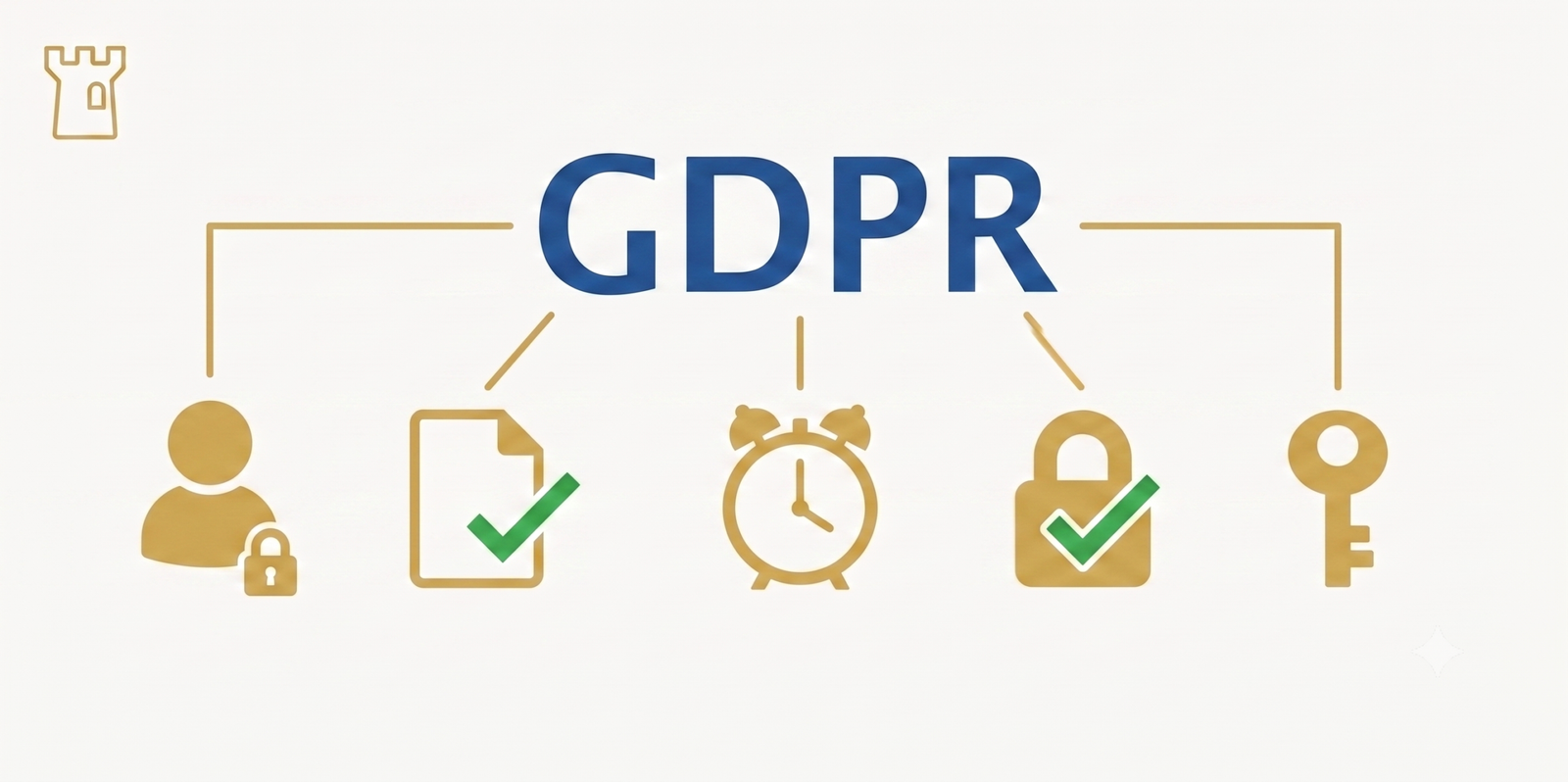
GDPR stands for General Data Protection Regulation. This privacy law was put into effect in 2018, replacing the Data Protection Directive 95/46/EC. It applies to the European Union and imposes obligations on any organization that collects and uses personal data within the European region. This law was established to ensure the privacy and protection of personal data at an organizational level.
Arguably, GDPR is one of the toughest data security laws in the world. It classifies three important roles — data subjects, controllers, and processors.
Data Subject — The data subject refers to the individual whose personal data has been collected.
Controller — Controllers determine the conditions, purpose, and means of processing the data subject’s personal data.
Processor — The processor handles personal data on behalf of the controller.
Note: GDPR protects only personal data — meaning data that can be used to identify a specific individual.
Understanding GDPR Compliance
Following GDPR compliance is crucial for every organization that collects or uses personal data. Organizations that comply build trust among business partners and customers — and avoid significant financial penalties for non-compliance.
Major Principles in GDPR
1. Transparency
All data subjects have the right to be informed before their data is used. Once consent is given — known as opt-in — they can withdraw that consent at any time.
2. Accuracy
Personal data must be kept accurate and up to date at all times. Organizations are responsible for ensuring the data they hold reflects current and correct information.
3. Purpose Limitation
Data must be collected and used only for the specific purpose for which consent was given. Using personal data beyond its stated purpose is a direct violation of GDPR.
4. Storage Limitation
Organizations may only keep personal data for as long as it is genuinely needed. Once the purpose has been fulfilled, data must be deleted.
Importance of GDPR
1. Broader Business Opportunities
GDPR compliance opens access to the European market and builds credibility with privacy-conscious customers, business partners, and investors.
2. Minimizes Legal Risk
Following GDPR requirements helps organizations avoid substantial financial penalties that can result from non-compliance.
3. Stronger Organizational Reputation
Demonstrating a commitment to data protection builds a trustworthy reputation in competitive business markets — particularly in sectors where data handling is closely scrutinized.
4. Alignment With Future Privacy Regulations
Following GDPR prepares organizations for most other global privacy laws — including those in Brazil, India, and California — because many are built on the same core principles. It also creates readiness for emerging AI regulations, as GDPR already addresses user rights and transparency requirements for automated decision-making.
Rights Under GDPR
GDPR establishes several rights for data subjects within its jurisdiction.
Right to Be Informed
Data subjects must be made aware of what personal data is being collected, how it will be used, and how long the organization intends to keep it.
Right of Access
Individuals can request access to their personal data and obtain a copy of it. This maintains transparency around how their data is being processed.
Right to Rectification
Individuals can request that inaccurate or incomplete personal data be corrected to ensure all information held about them is accurate and up to date.
Right to Erasure
In certain circumstances, an individual can request the deletion of their personal data. This applies when the organization no longer needs the data or when the individual withdraws their consent.
Right to Restriction of Processing
Data subjects have the right to request that an organization limits how their personal data is used — effectively pausing processing while a concern is being reviewed.
Right to Data Portability
Individuals have the right to receive their personal data in a commonly used digital format and transfer it to another data controller of their choosing.
Right to Object
Data subjects can instruct an organization to stop using their personal data at any time. The organization must comply unless it can demonstrate a compelling and legally valid reason to continue processing.
Final Thoughts
GDPR is more than a legal requirement; it is a framework for how organizations should treat personal data. Built on transparency, accuracy, and purpose limitation, plus the seven rights of individuals, it puts people in control of their information. Companies that take it seriously build trust, strengthen partnerships, and stay ahead of global privacy laws.
The principles are simple: collect only what you need, use it only as stated, keep it accurate, and delete it when no longer needed. Respect every individual’s right to access, correct, or remove their data anytime.
GDPR compliance is an ongoing commitment, not a one-time checkbox. As privacy regulations tighten worldwide, a clean, consent-based approach to data becomes a competitive advantage.
For organizations aiming to align with GDPR, working with a verified data partner is a practical first step. ContactMetrix offers verified contacts, regular refresh cycles, and full GDPR compliance, so your team works from a trustworthy foundation.
