
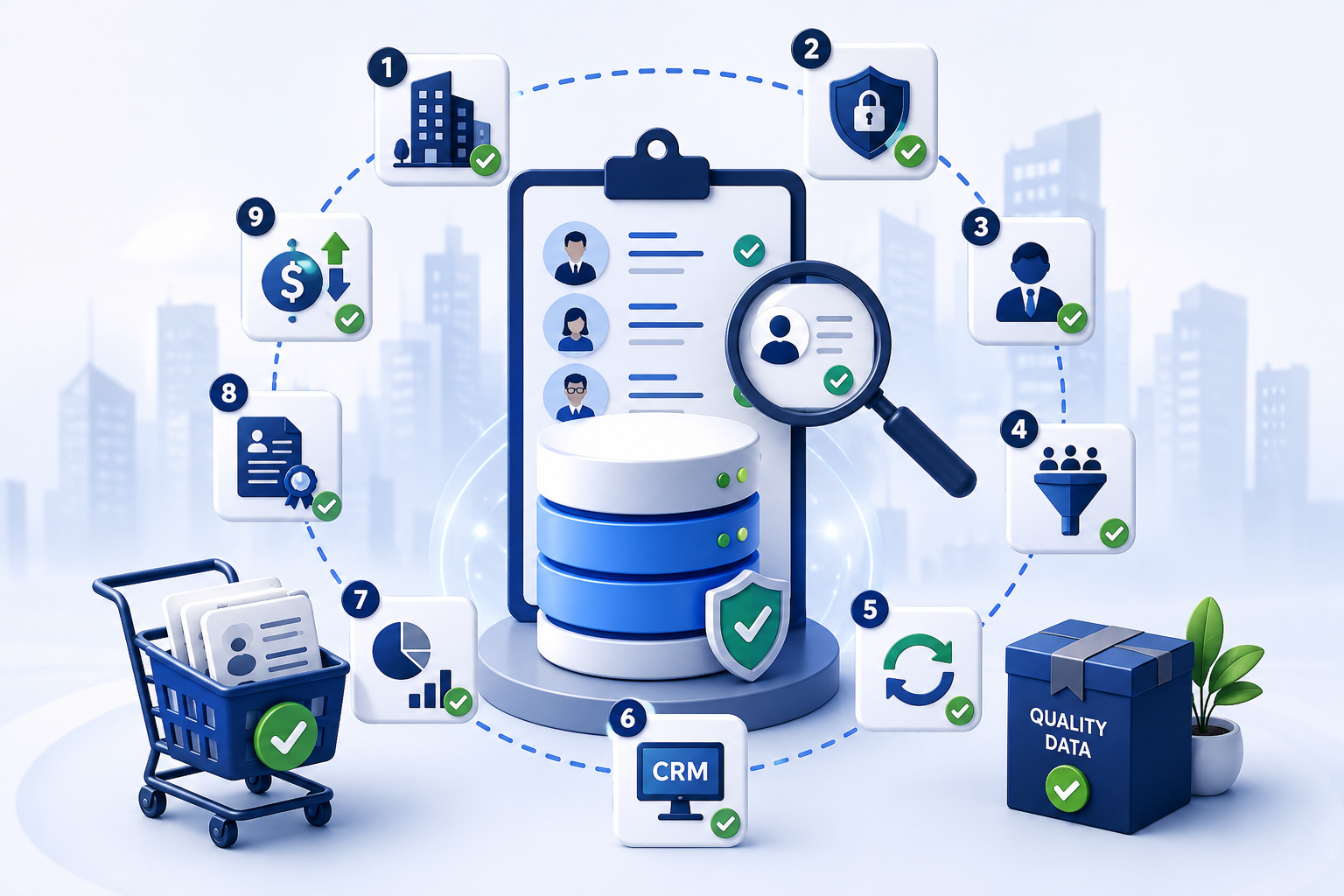
Buying B2B data looks very easy. You make a purchasing decision, you get a comprehensive list. But the reality is messier than that. Bad data wastes your entire team’s time, damages your reputation, and sometimes puts you in legal trouble.
This guide walks you through exactly what to check before making a B2B data purchase, so you get a list that actually works.
Why Smart B2B Teams Buy Data Instead of Building Lists
Building a B2B contact list from scratch is slow, expensive, and pulls your sales team away from what they should actually be doing. Purchasing B2B data gives you immediate access to verified decision-makers in your target market, reducing the gap between prospecting and outreach.
But not all data is worth buying. The difference between a good B2B data purchase and a bad one comes down to nine factors.
1. Know Your Target Market Before You Buy
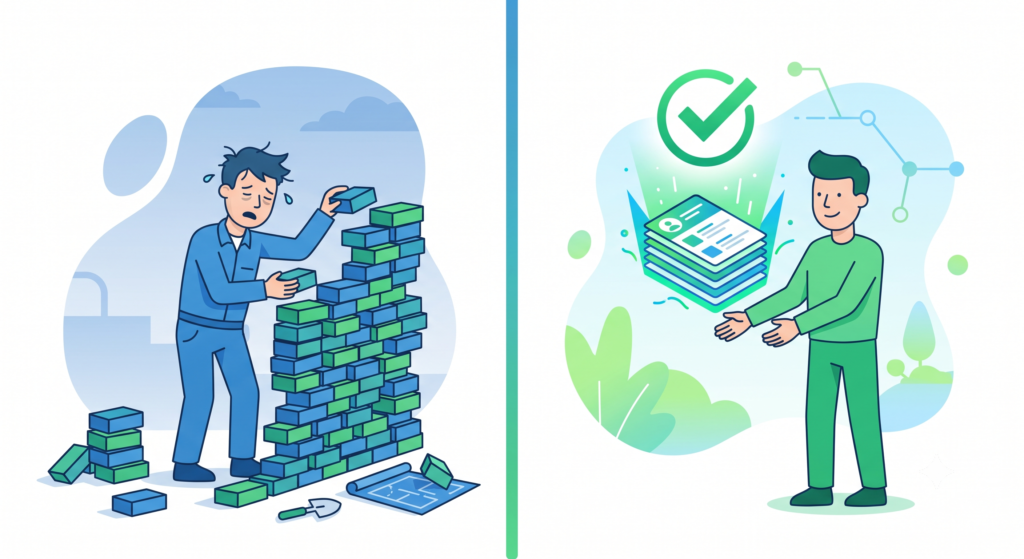
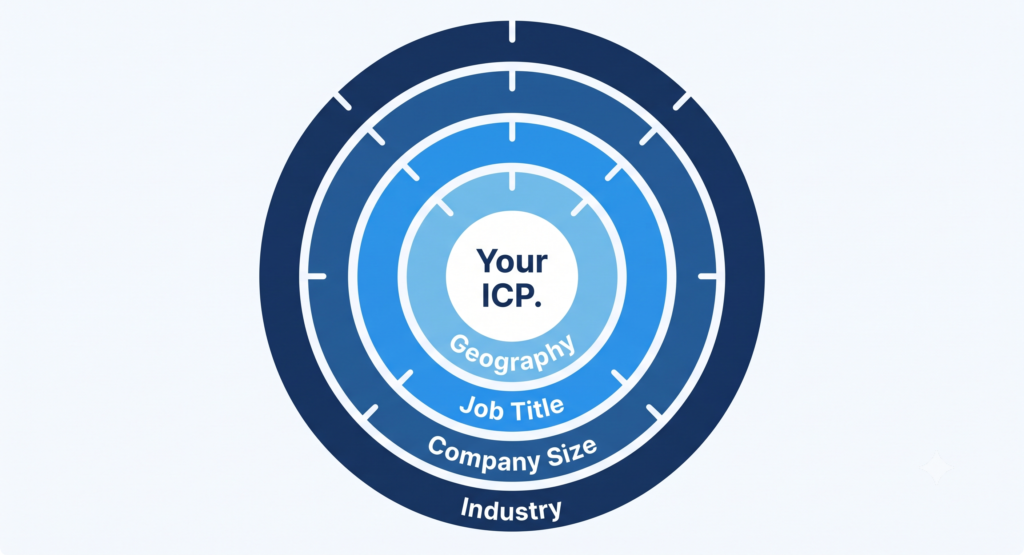
Before approaching any B2B data provider, know exactly who you are targeting. Key information such as industry, company size, geography, job title, and revenue range should be well defined before a single conversation with a vendor.
Without a clear Ideal Customer Profile, you will end up buying a generic list that does not match your actual buyers. The more specific your brief, the more useful the data you receive.
Do: Define your Ideal Customer Profile in writing before contacting any vendor.
Don’t: Buy a list and figure out who you are targeting afterward.
2. Purchase From Reputable Providers
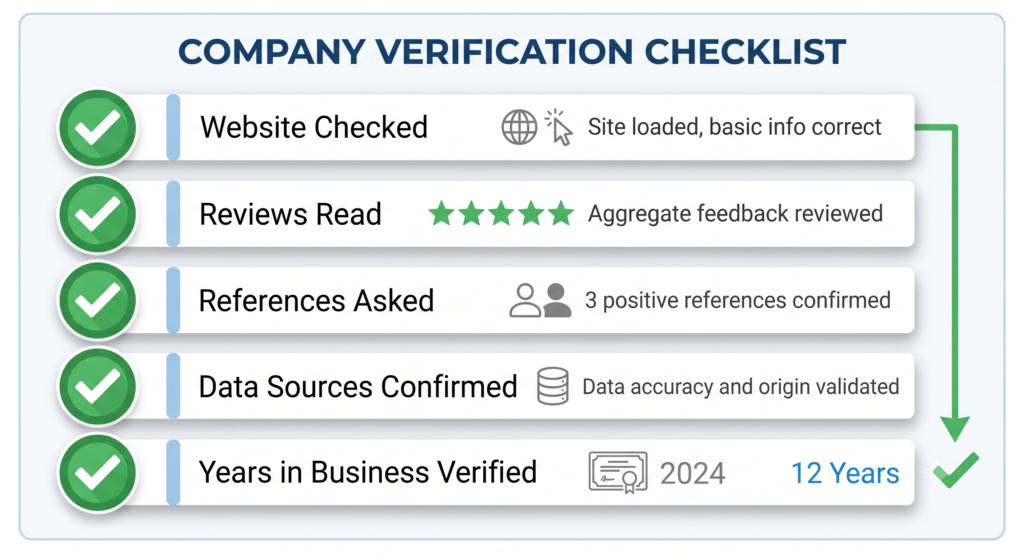
The B2B data market is full of vendors selling outdated, scraped, or non-compliant lists at cheap prices. Any provider you consider must be transparent about where their data comes from.
Before committing, check their website, read reviews on third-party platforms, ask for references, and find out how long they have been operating. Transparency is the first sign of a trustworthy B2B data provider.
Do: Research the vendor thoroughly before purchasing.
Don’t: Rush into buying from unknown or unverified sources.
3. Always Ask for a Sample First
Any reputable B2B data provider will offer a free sample before you commit to a full purchase. Use it. Check the sample for accuracy, completeness, and relevance to your target audience.
If the sample accuracy falls below 90%, do not make a purchasing decision. For email outreach specifically, aim for a provider whose data hits 95% accuracy or above. A sample also tells you whether the key fields you need — job title, company name, email, phone, and firmographic data — are all present and properly formatted.
Do: Test sample data against your own CRM records where possible.
Don’t: Purchase a B2B contact list without seeing a sample first.
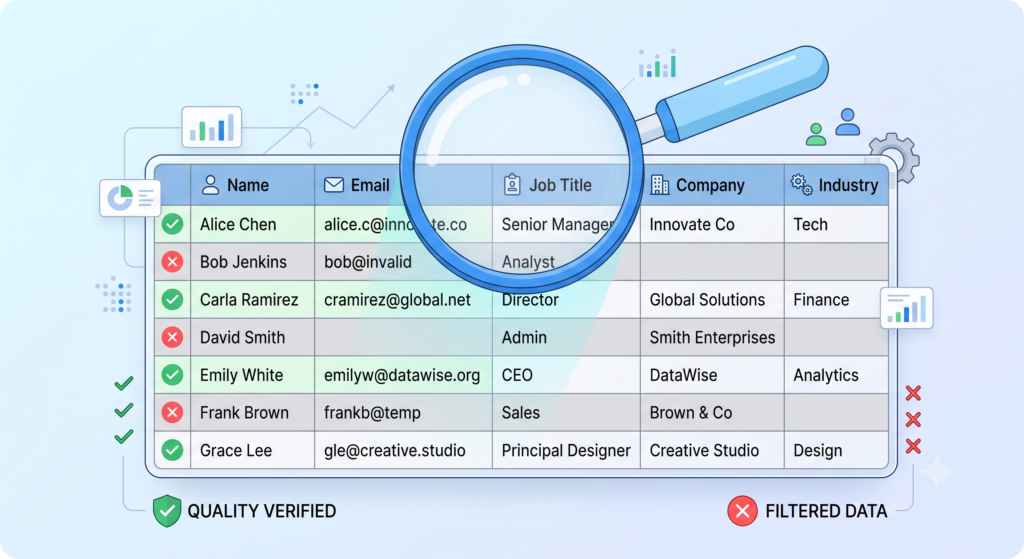
4. Verify the Data Is Human Verified
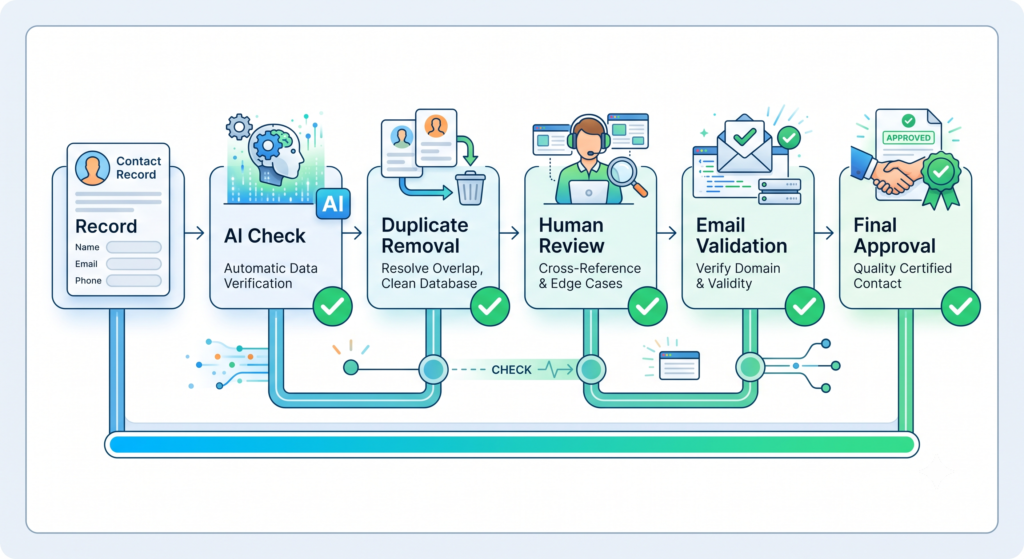
Automated data collection picks up errors that only human review catches. Providers who combine AI verification with human checks deliver more accurate lists than those relying purely on automated tools.
Ask your provider directly: how is the data verified? How many verification steps does each record go through? The answer tells you a great deal about the accuracy you can expect from that vendor.
Do: Choose providers who use a multi-step human and AI verification process.
Don’t: Assume all verified data is verified the same way.
5. Confirm Full Compliance
Every B2B data purchase carries legal responsibility. The data you buy must comply with the privacy laws applicable in the regions you are targeting.
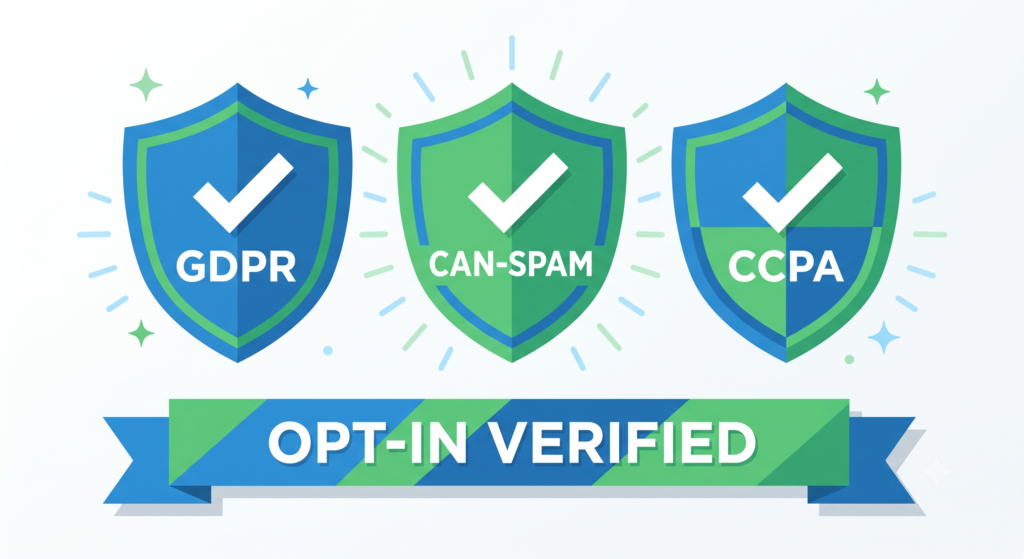
The three frameworks you need to understand:
- GDPR — Applicable in the EU and UK. Requires opt-in consent. Fines up to 4% of global annual turnover.
- CAN-SPAM — Applicable in the United States. Requires a visible unsubscribe option in every email.
- CCPA — Applicable in California. Gives residents the right to request data deletion.
Always ask your provider for proof of compliance and confirm that every contact is opt-in verified.
Do: Ask for written confirmation of compliance before purchasing so you never get caught in legal trouble.
Don’t: Assume compliance — verify it.
6. Check Data Freshness and Refresh Cycles
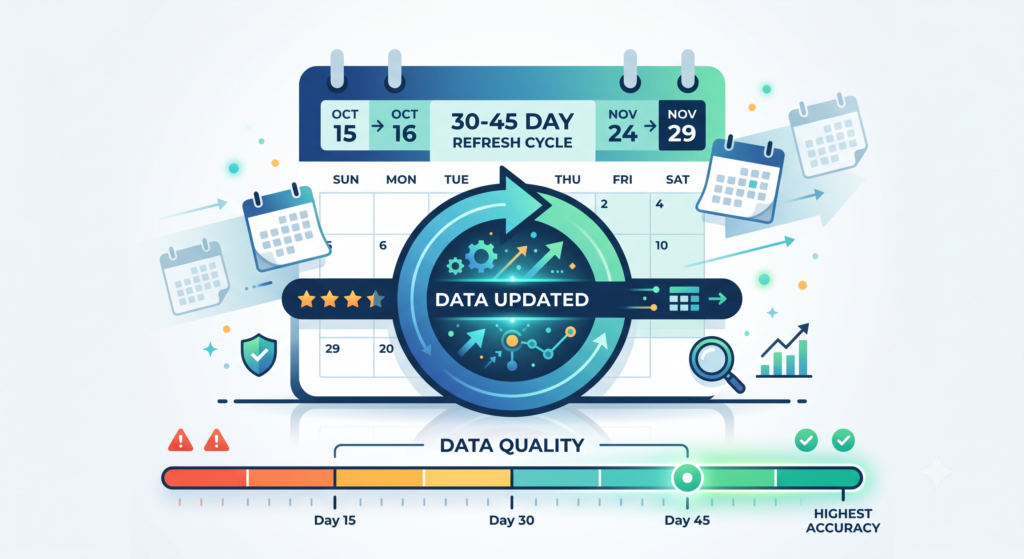
B2B data decays at approximately 30% per year. A list that was accurate six months ago may already have major gaps. Ask your provider how frequently they refresh their database and what their process is for removing deactivated contacts and updating role changes.
A reliable provider refreshes records every 30 to 45 days. Anything less frequent than that will impact your campaign performance directly.
Do: Ask for the provider’s exact refresh cycle before purchasing.
Don’t: Buy B2B data without knowing when it was last updated.
7. Check Segmentation and Customization Options
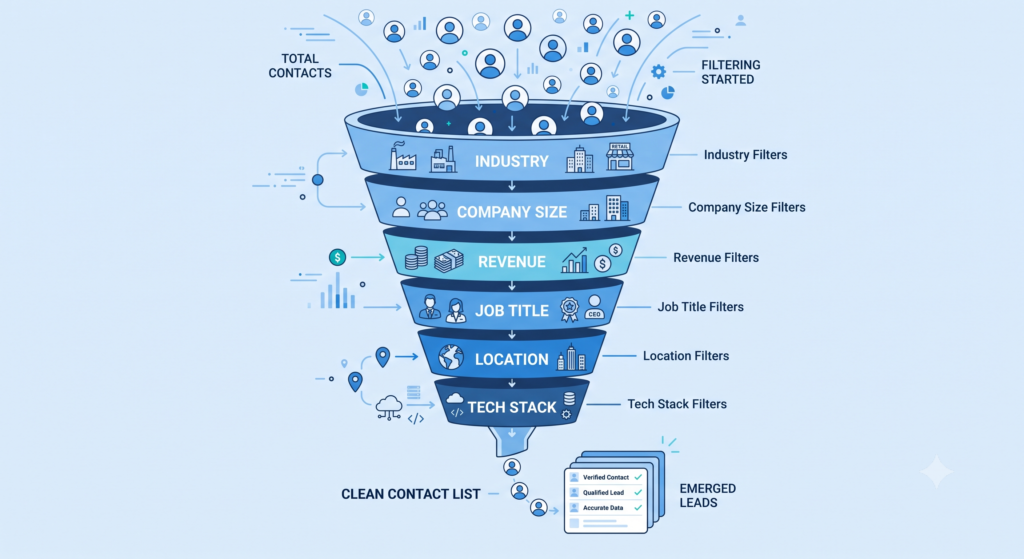
Generic one-size-fits-all lists do not work for targeted B2B outreach. Your data provider must allow you to filter and customize your B2B contact list by job title, industry, company size, revenue, geography, and technology stack.
The more granular the segmentation options, the more precisely you can target your ideal accounts, and the more relevant your outreach becomes.
Do: Check for a full list of available filters before purchasing.
Don’t: Accept a generic list when targeted segmentation is available.
8. Confirm CRM Compatibility and Delivery Format
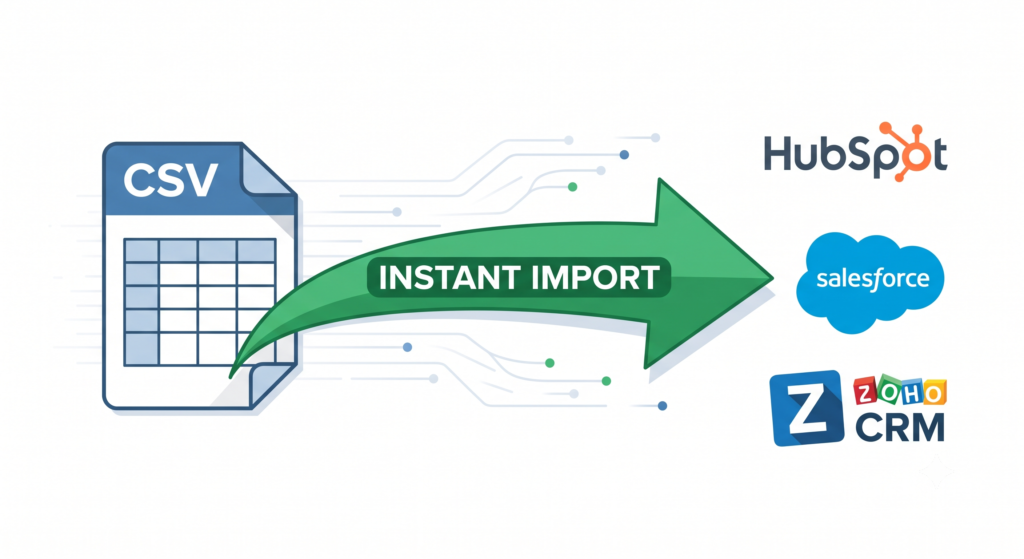
The best B2B dataset in the world is useless if it does not load into your CRM cleanly. Before purchasing, confirm that your provider delivers data in CSV or Excel format with standardized field names that map directly to your CRM fields.
A good provider makes import seamless. A bad one leaves your team spending hours on manual formatting before a single email goes out.
Do: Confirm file format and field naming conventions before purchase.
Don’t: Assume the data will be CRM-ready without checking.
9. Evaluate Pricing Honestly
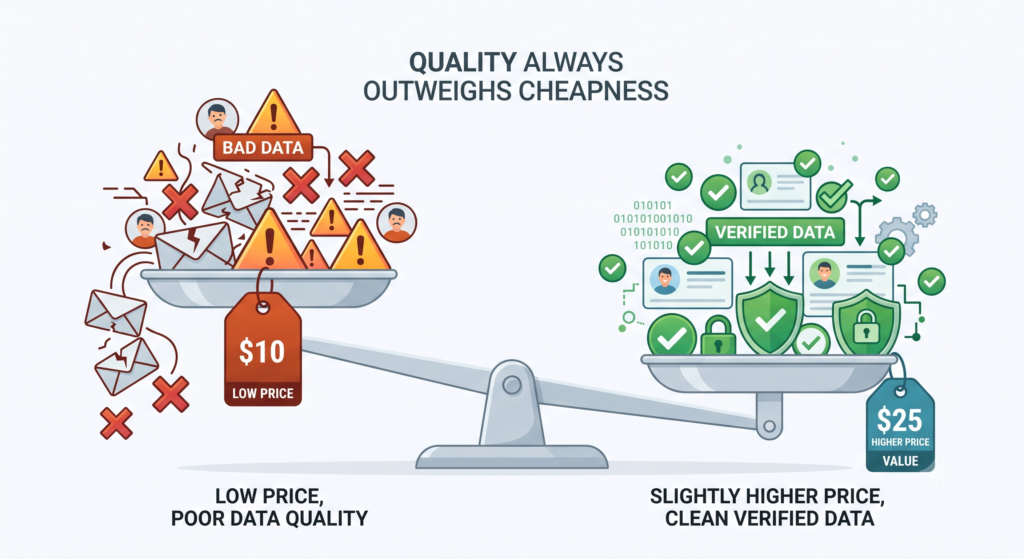
Cheap data is almost always bad data. Expensive data is not always good data. The right benchmark is value — what accuracy rate, compliance level, segmentation depth, and refresh cycle are you getting for the price?
Get quotes from at least three B2B data providers. Compare them not on price alone but on the quality indicators covered in this guide. A slightly higher investment in clean, verified, compliant data pays back many times over in campaign performance.
Do: Compare providers on quality metrics, not price alone.
Don’t: Choose the cheapest option without understanding why it is cheap.
Quick Reference: What to Do and What to Avoid
| Do | Don’t |
|---|---|
| Define your ICP before buying | Buy data without a targeting brief |
| Request a free sample | Skip the sample to save time |
| Verify compliance documentation | Assume the data is compliant |
| Check data refresh cycles | Buy without asking when data was last updated |
| Confirm CRM friendliness | Assume the format will work |
| Compare providers on quality | Choose purely on price |
Looking for Customize B2B
Conclusion
A B2B data purchase is only as good as the checks you run before committing. Accuracy, freshness, compliance, segmentation, CRM compatibility, and vendor credibility are the six pillars that determine whether the data you buy moves your pipeline forward or sets it back.
Getting these checks right before you buy a B2B email list is not extra work — it is the work. It is what separates a campaign that lands in front of real decision-makers from one that bounces, goes to spam, or worse, creates a legal problem you did not see coming.
At ContactMetrix, every B2B data purchase comes verified, compliant, and CRM-ready — refreshed regularly so your team always reaches real decision-makers in active roles. Explore our data solutions before your next campaign.
Frequently Asked Questions
1. How do I know if a B2B data provider is trustworthy?
Check their website for transparency about data sources, read third-party reviews, ask for references, and request a free sample before committing. A trustworthy provider will have no hesitation answering questions about how their data is collected, verified, and refreshed. If a vendor is vague about any of these points, that is a red flag.
2. What accuracy rate should I expect from a B2B data purchase?
A reliable B2B data provider should deliver a minimum of 90% accuracy across all contact records. For email outreach specifically, aim for 95% or above. Anything below 90% will result in high bounce rates, wasted outreach effort, and potential damage to your domain reputation with email providers like Gmail and Microsoft.
3. How do I check if purchased B2B data is GDPR compliant?
Ask your provider for written confirmation that every contact has provided opt-in consent to receive commercial communications. Also confirm compliance with CAN-SPAM and CCPA if you are targeting contacts in the United States. Never assume compliance — always ask for documentation before completing a B2B data purchase.
4. What file format should B2B data be delivered in?
Always confirm that your provider delivers data in CSV or Excel format with standardized field names that map directly into your CRM. HubSpot, Salesforce, and Zoho all work seamlessly with clean CSV files. If the data arrives in an incompatible format, your team will spend hours on manual cleanup before a single outreach email goes out.
5. Is it better to buy B2B data or build a list in-house?
Both have merit but serve different timelines. Building in-house gives you full control but takes significant time and resource. Buying from a verified B2B data provider gives you immediate access to a targeted contact list. For most teams with active pipeline targets, purchasing is the faster and more practical route — as long as the checks in this guide are followed before purchase.
