
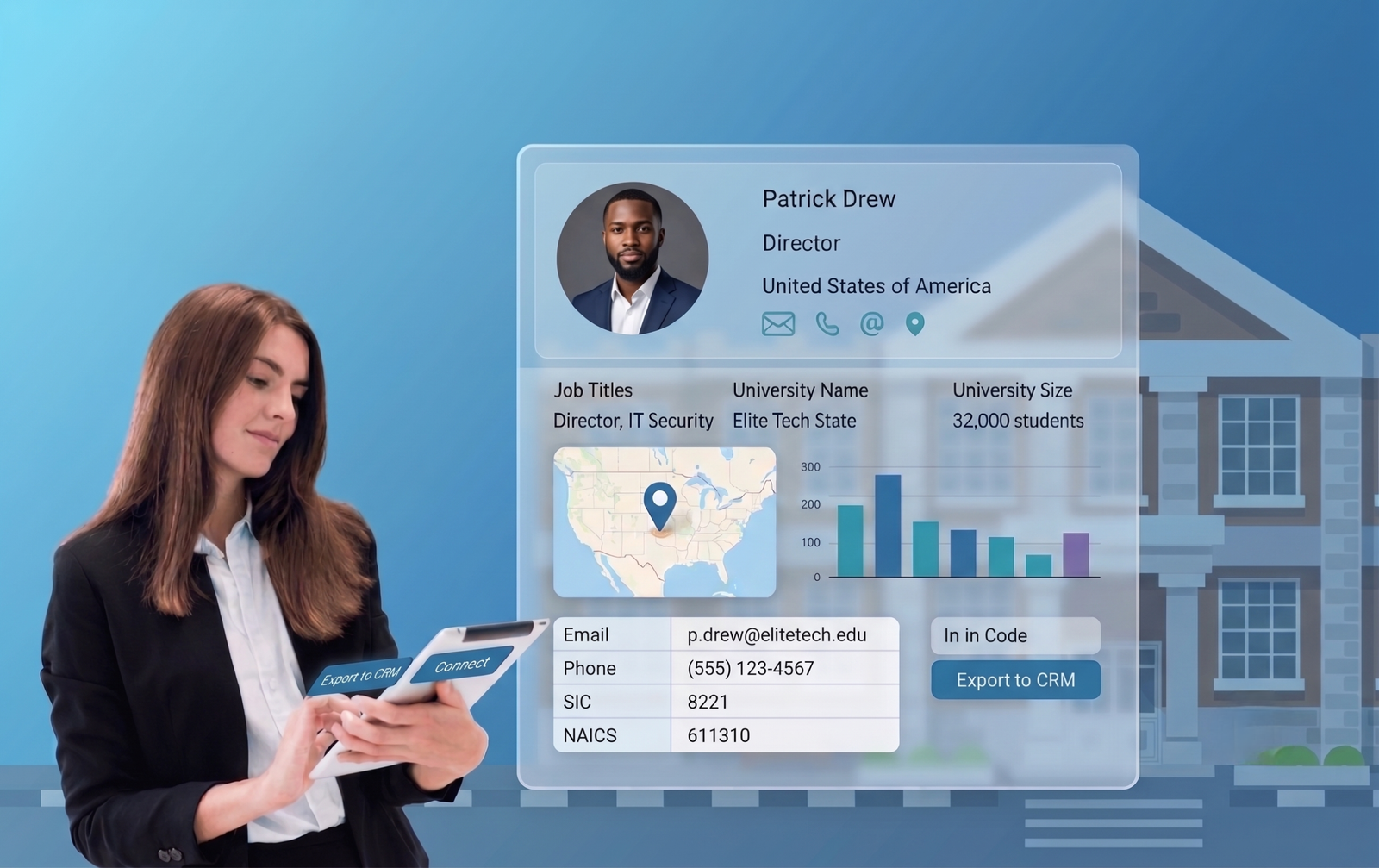
A College Email List is one of the most direct ways to reach the faculty, administrators, and procurement officers who control purchasing in higher education. But selling to colleges is not like selling to businesses. It runs on people, process, and paperwork, and it follows a budget cycle that decides when departments are actually ready to buy. Understanding how that works is what makes a College Email List useful rather than just a set of contacts.
Why Selling to Colleges Is Different
Every procurement process in a university or college concentrates on three aspects: people, process, and paperwork. People are responsible for procurement at every stage. The process covers the workflow and the overall guidelines of procurement. The final stage is management of the paperwork.
Procurement decisions are closely tied to the academic fiscal year, with budgets typically approved in one cycle and deployed in the following one. This timing shapes when departments are actively ready to purchase.
How Purchasing Decisions Get Made at a University
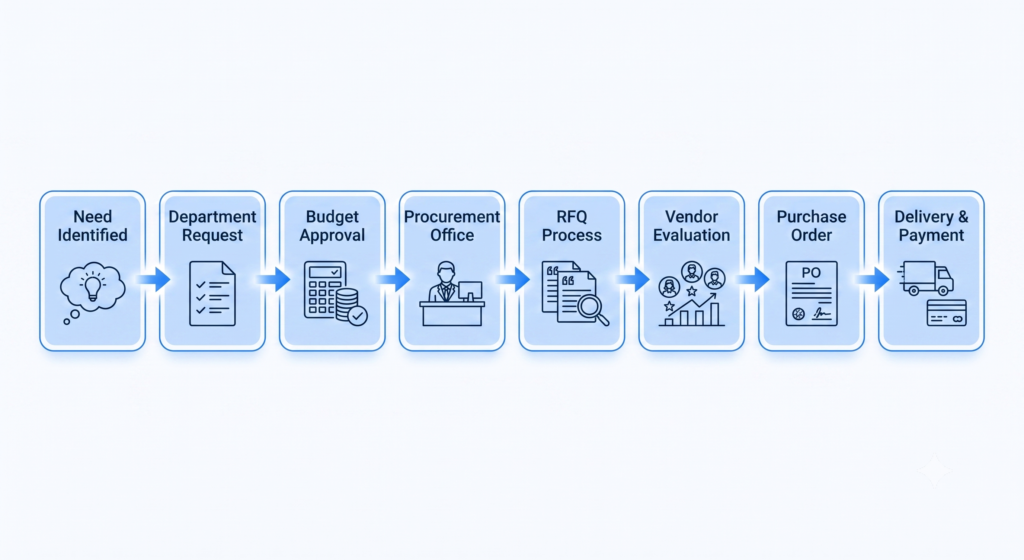
It starts with the identification stage, where faculty members identify the requirement. This can be anything from scientific equipment to IT software. After that, the requisitioning process begins, where the department makes a purchase request through the ERP system. This confirms that funds are sufficient and within budget.
The procurement office then asks for quotations (RFQ) from vetted suppliers. The review board evaluates bids, and the contract goes to the vendor offering the best value, based on factors such as price and technical qualifications. After this, a purchase order is generated. Payment is only released after the receiving department confirms the delivery and verifies the goods or services, at which point the supplier’s invoice is settled.
College Procurement Workflow
The following workflow summarizes how a typical purchasing decision moves from identifying a departmental need to vendor payment.
The College Budget Cycle: When Departments Are Ready to Buy
Budget cycles are built to keep institutional goals aligned with available funding. This determines when and how departments prepare their purchasing decisions. The budget cycle typically spans 12 to 18 months and moves through distinct stages.
1. Planning and Requirement Definition
This stage begins 6 to 9 months before the fiscal year starts. Departments assess their upcoming needs, such as lab equipment, software, or facilities maintenance. After internal consideration, department heads draft their initial budget requests.
2. Review and Approval
Once requests are submitted, the finance office, deans, and senior leadership review each one individually. These requests are then consolidated into a single institutional budget. The finalized budget is approved by the governing board, such as a Board of Regents or Board of Trustees.
3. Execution and Active Procurement
Once the fiscal year begins, departments move from planning into action. This is when vendors are identified, quotations are requested, and purchase orders are issued. This stage runs throughout the entire fiscal year as departments execute their approved budgets.
4. Year-End Closeout
As the fiscal year ends, departments finalize any open purchases. Depending on institutional policy, unspent funds are either rolled over or returned to the general fund. This creates a narrow but important window where departments are motivated to finalize purchases before losing unused budget.
Businesses That Benefit From a College Email List
A College Email List is used by vendors, recruiters, and consumer brands to reach faculty, staff, and administration.
- EdTech Companies aim to sell LMS platforms and software to department heads and IT leaders.
- Publishers and Retailers promote academic textbooks and research papers at considerable rates.
- Recruiters and Employers approach university placement cells to fill internship roles and hire graduates with specific backgrounds.
- Financial Institutions approach university administration and student services departments to offer banking partnerships or institutional loan programs.
Build Your Targeted College Audience
Who Are the Decision-Makers in a College Email List
| Decision-Maker Category | Roles | What They Control |
|---|---|---|
| ACADEMIC | Academic Leaders — Deans, Provosts, Department Heads | Academic software, textbooks, and program-related decisions |
| EXECUTIVE | Administrative Executives — Presidents, Chancellors, Board Members | Institutional direction, partnerships, large budget approvals |
| OPERATIONS | Operational & IT Managers — CIOs, IT Directors, Procurement Officers | Campus technology budgets, software licenses, infrastructure |
| STUDENT SERVICES | Student Services & Enrollment — Admission Directors, Financial Aid Offices | Campus housing, recruitment, student success initiatives |
| FACULTY | Faculty & Researchers — Professors, Instructors, Principal Investigators | Classroom tools and equipment for their specific departments |
What Does a College Mailing List Include?
A College Mailing List includes key data fields such as Institution Name, Phone Number, and Email Address. It also covers Campus Size, Institution Type (public university, private college, community college, technical or vocational school), Field of Study or Academic Department, and Technology Use such as LMS or campus software where available.
What to Check Before Buying a College Email List
Before you buy a College Email List, check the following:
- CRM-ready format, so the data integrates directly into your existing sales and marketing tools without manual reformatting.
- Data refresh frequency, since outdated contact information leads to higher bounce rates and wasted outreach.
- Industry segmentation, allowing you to filter contacts by department or institution type for more relevant campaigns.
- Geographic targeting, useful when expanding into specific states, regions, or countries.
- Verified contact accuracy, ensuring the emails and numbers you reach are active and correctly attributed.
- Responsive customer support, in case data discrepancies or list issues need quick resolution.
Businesses should avoid outdated databases, as they degrade overall email performance and significantly increase bounce rates.
Why Choose ContactMetrix for Your College Email List
Not every email list performs well. Our College Email List is built on depth, accuracy, and opt-in compliance from legitimate sources, including AACSB, ACE, and NACUBO member directories, accreditation registries, higher education trade shows, university staff directories, and professional academic networks.
The list can be filtered by institution type, whether community college, public university, or private college, and by department, whether Arts, Science, Engineering, Business, Medicine, and many more.
Our standard refresh rate keeps your contacts marketing-worthy with 95% accuracy, refreshed every 30 to 45 days so that accuracy is not compromised.
Reach the Right Higher Education Professionals
Conclusion
Selling to colleges is not like selling to businesses. It runs on people, process, and paperwork, moves through a structured budget cycle, and rewards vendors who show up at the right stage with the right decision-makers.
A well-built College Email List shortens that path, connecting you directly to the deans, IT directors, procurement officers, and faculty who control purchasing. With sources drawn from AACSB, ACE, and NACUBO directories, accreditation registries, and academic networks, refreshed every 30 to 45 days at 95% accuracy, ContactMetrix gives you a list built to reach the people who make decisions, and the reach to earn referrals among students, parents, and faculty long after the first sale.
Frequently Asked Questions
1. How do I get on a college email list?
To get on a college email list, suppliers typically appear through legitimate, verified sources such as accreditation registries, university staff directories, higher education trade shows, and professional academic networks like AACSB, ACE, and NACUBO member directories. Vendors who want to reach colleges usually acquire a verified list compiled from these sources rather than building one manually.
2. How does procurement work at a university?
It starts when faculty identify a requirement, then the department raises a purchase request through the ERP system to confirm budget. The procurement office requests quotations, a review board evaluates bids on price and technical fit, and a purchase order is issued. Payment is released only after delivery is received and verified.
3. How long is a college budget cycle?
A college budget cycle typically spans 12 to 18 months, moving through planning, review and approval, active procurement, and year-end closeout.
4. Who buys a college email list?
EdTech companies, publishers and retailers, recruiters and employers, and financial institutions use it to reach faculty, staff, and administration.
5. When is the best time to sell to colleges?
Outreach timed to land during the planning stage, months before the fiscal year begins, has a far higher chance of being included in a department’s budget request. There is also a year-end window where departments finalize purchases before unused budget is lost.
