You purchased a mailing list of registered nurses. Now what?
Most healthcare recruiting agencies follow a similar process. They buy a list, send a standard email, wait for replies, and often feel disappointed by the results.
They often blame the nurses, saying things like “they’re not interested in moving,” “the market is saturated,” or “they can’t compete on salary.”
But that’s not really the problem.
The real issue is that they don’t know how to use the list effectively.
A registered nurses email list is just a tool. Like any other tool, it’s only helpful if you know how to use it.
This guide shows what sets successful recruiters apart from those who waste their lists.
The approach is straightforward, specific, and it works.
The Biggest Mistake: Treating Every Registered Nurse the Same
A registered nurse is not just a registered nurse; different nursing roles have different responsibilities, priorities, and levels of decision-making.
The needs of a registered nurse at the bedside during a night shift in an intensive care unit differ greatly from those of a nurse manager overseeing staffing, budgets, and equipment decisions. While the clinical educator focuses on training and professional development, the charge nurse manages the day-to-day running of the shift and supports the nursing team.
Yet many generic registered nurses email lists group all these professionals together and send them the same message.
The result? Your campaign may reach the wrong audience, miss key decision-makers, and generate little engagement.
A quality registered nurses email list does more than just collect nurse contacts. It helps you find people by role, responsibilities, specialty, seniority, and buying influence, so your message reaches the right professionals.
How to Use a Registered Nurses Email List for Healthcare Recruiting
Buying a registered nurses email list is just the first step. You only get real results by using it the right way.
Sending the same message to every nurse rarely works. Nurses have different specialties, experience levels, career goals, and preferences. Your approach should reflect these differences.
Here’s how you can turn your list into real recruiting conversations.
Step 1: Customize Your List Before Sending
Don’t send the same message to everyone. Start by sorting nurses into groups like:
- Experience: New graduates, mid-level, experienced nurses
- Current role: Staff nurse, charge nurse, nurse manager
- Specialty: ICU, ER, OR, pediatrics, oncology, and more
- Location: State, city, or specific hiring area
- Career interest: Actively looking, passive candidates, or open to new opportunities
For example, a new graduate may care most about training and development, while an experienced ICU nurse may focus on pay, schedule, and flexibility.
The more relevant your message, the more likely nurses are to respond.
Step 2: Personalize Your Message
Different candidates respond to different messages. Make sure your outreach matches what matters to each group.
Actively Searching Nurses
Keep it simple and specific. Include the role, location, pay, and schedule.
Subject: ICU Position Available – [City]
They want the key details up front and don’t want to waste time.
Passive Candidates
Avoid starting with a hard sales pitch. Begin with a conversation instead.
Subject: Open to a New Opportunity in [City]?
Explain why you’re reaching out and give them a reason to reply.
Nurses Exploring a Career Change
Highlight the opportunity and show how it can help them take the next step in their career.
Subject: Explore Your Next Nursing Career Move
Point out what they could gain by making a change.
Travel Nurses
Start with the details that matter most to them:
- Location
- Pay
- Housing
- Contract length
- Schedule
Subject: Travel Nursing Opportunity – Housing Included
High-Value Candidates
Take a more personal approach with top candidates. Instead of sending a generic message, show you know their background and explain why you’re reaching out.
Step 3: Follow Up More Than Once
One email usually isn’t enough.
A simple recruiting sequence could look like this:
Day 1: Send the initial personalized email
Day 5: Follow up with another relevant benefit
Day 8: Try a phone call or LinkedIn message
Day 12: Send a short final follow-up
Every time you reach out, you give the candidate another chance to get involved.
Change your message each time instead of just resending the same email.
Step 4: Turn Responses Into Real Conversations
If a nurse replies, stop selling and start listening.
An actively searching nurse may want to discuss:
- Pay
- Schedule
- Location
- Start date
A passive candidate may want to know about:
- Career growth
- Workplace culture
- Flexibility
- Long-term opportunities
An experienced nurse may want to know what makes this role different from others.
Instead of offering the same job details to everyone, focus the conversation on what matters most to them.
Step 5: Don't Rely on Email Alone
Email is helpful, but recruitment works better when you use several ways to reach people.
A registered nurses email list with verified phone numbers gives recruiters another way to contact qualified candidates.
Phone outreach can help you:
- Start conversations faster
- Explain the opportunity clearly
- Build personal rapport
- Answer questions immediately
- Handle objections in real time
The goal isn’t to contact as many nurses as possible, but to reach the right nurses with the right message at the right time.
Why Generic Registered Nurses Email Database Fails
Not all registered nurses have identical roles, requirements, or purchasing power. For example, bedside nurses, charge nurses, nurse managers, and clinical educators perform different duties and usually have different priorities around clinical decisions, products, and services.
A one-size-fits-all list makes your outreach less relevant and harder to convert.
Different Types of Registered Nurses and Why Segmentation Matters
Nurses have many different roles, each with its own responsibilities, priorities, and level of purchasing power. If you treat all nurses as one group, your outreach will be less relevant, and your campaign won’t perform as well.
Bedside Registered Nurses: Provide direct patient care, follow clinical protocols, and use healthcare products and systems every day. They are not usually involved in purchasing decisions.
Charge Nurses: Coordinate shift operations, manage staffing, support clinical teams, and handle daily workflow issues. They can influence which tools and services nursing teams use.
Nurse Managers: Oversee nursing departments, manage staff and budgets, and may approve or influence purchases of equipment, software, and other healthcare solutions.
Clinical Educators: Handle staff training, certifications, continuing education, and professional development. They may be involved when products or systems require staff training.
Nurse Practitioners & Specialists: Provide advanced patient care and often have greater independence in selecting clinical tools, equipment, and services for their work.
School Nurses & Public Health Nurses: Work in schools, community programs, and public health settings where budgets, regulations, and purchasing processes can differ from hospitals.
A common problem with registered nurses email databases is putting all these professionals into one list and sending the same message to everyone. This means your campaign might reach people who aren’t involved in buying decisions and miss those who actually influence purchases.
The best approach is to divide your database by job title, role, organization type, responsibilities, and buying authority. This helps you create better campaigns, reach the right nurses, and make your outreach more effective.
Why Your Registered Nurse Email List Needs Regular Updates
Nursing is a profession that is always evolving. Nurses may change hospitals, shift to different departments, take on new roles, or even leave the healthcare industry completely. These changes can happen at any time during the year, not just when the annual database updates occur.
The problem is that many registered nurse email databases are updated too infrequently. A contact that was accurate when you purchased the list may have a different job, a new email address, or may no longer work in healthcare when you launch your next campaign.
You waste money and time on the wrong people. As old contacts grow, more emails bounce, fewer people respond, and you get fewer good leads.
A database isn’t truly valuable just because you verified it once. It needs regular updates, email validation, and ongoing data maintenance to stay useful.
For better campaign results, choose a registered nurses email database that is regularly refreshed and checked for changes in job titles, employers, contact details, and professional status.
What Really Happens When You Buy a “Verified registered nurses email database” List
Your sales team starts a campaign, and things look good at first. But soon, engagement drops, and by the third week, responses have almost stopped.
You check the database and find a few bounced emails. That’s not unusual. But then you notice something bigger—the open rates are low, and the people who do open your emails rarely respond.
So your team tries new subject lines, rewrites messages, and tests new offers. Still, the results don’t get better. The problem might not be your campaign. It could be the contacts you’re reaching.
A “verified” email address just means the contact info was checked. It doesn’t mean the person is the right audience or has buying authority.
You may be reaching nurses who use the product every day but have no role in approving the purchase. Meanwhile, the nurse managers, department leaders, or other decision-makers you actually need to reach may be missing from your campaign.
That’s why a segmented registered nurses email list should go beyond email verification. It should include accurate job titles, roles, specialties, seniority, and buying influence.
Having thousands of active contacts doesn’t help if your message never reaches the people who can make or influence buying decisions.
5 Signs of a Bad Registered Nurses Mailing List Provider
A large registered nurses mailing list doesn’t always mean quality data. Watch for these common warning signs:
1: No Role-Based Segmentation
If you put every nurse in one general list, your campaigns may reach the wrong audience.
Look for: Segmentation by job title, role, specialty, and seniority.
2: Infrequent Data Updates
Nurses change jobs, departments, and roles regularly. Old data can quickly become useless.
Look for: Regular database refreshes and contact verification.
3: Email-Only Data
A verified email doesn’t confirm that the person still holds the same role or works at the same organization.
Look for: Business phones, job titles, company details, and employment information
4: Titles Without Buying Context
Having a job title does not necessarily mean someone has the authority to make purchases.
Look for details about seniority, responsibilities, and how much influence someone has in making decisions.
5: Accuracy Claims Without Guarantees
A claim of ‘95% accuracy’ doesn’t mean much unless there’s a clear process for verifying the data.
Look for transparent verification, bounce protection, and replacement guarantees.
In short, choose a provider who offers fresh, accurate, well-segmented, and verified data, not just a large list of contacts.
Looking to Connect with Registered nurses
How Can ContactMetrix Help You Reach a Verified Registered Nurses Email List
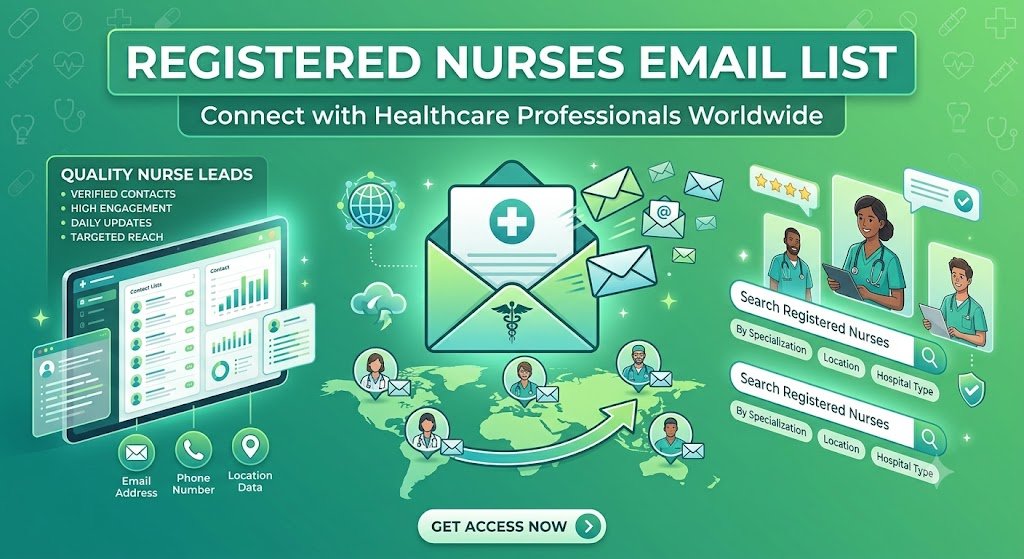
ContactMetrix enables you to access a database of verified registered nurses. The database includes more than 1.6 million registered nurse contacts in all geographic areas. It offers a verified, up-to-date, and segmented database, and we can assist you in connecting with registered nurses according to their specialty, years of experience, location, and other criteria. We specialize in providing the direct mobile numbers and personal email addresses of registered nurses.
We Verify Roles
We check important details such as:
- Current job role and department
- Decision-making authority
- Purchasing involvement
- Employer information
This helps you reach the right professionals, not just those with the correct job title.
We Segment by Role
You can target contacts such as:
- Bedside RNs – Product users and influencers
- Charge Nurses – Team and workflow influence
- Nurse Managers – Purchasing and budget decisions
- Clinical Educators – Training and education
- NPs & Specialists – Specialized clinical needs
- We Keep Data Fresh
Regular updates help you spot job changes, promotions, departures, and role changes, keeping your database useful for ongoing campaigns.
Direct Mobile Numbers and Personal Emails
Most nurses rarely check work email, and hospital switchboards keep recruiters out. We give you direct mobile numbers and personal email addresses, so your message reaches the nurse, not a front desk or a crowded work inbox. You call or text nurses directly, start real conversations, and fill open roles faster.
We Verify Contact Details
We check emails, phone numbers, job titles, and employment information to improve data quality and reduce outdated records.
Built for B2B Outreach
You can use your data for email campaigns, phone outreach, CRM campaigns, direct mail, and other marketing activities. Contacts are organized for more targeted outreach.
Want to Build Targeted Registered Nurses email list
Conclusion
Some recruiters fill positions while others don’t, and it’s not about talent—it’s about strategy.
Mass emails rarely work, but personalized messages always make a difference.
Nurses don’t leave their jobs because of generic emails. They leave when someone understands what they want and shows them how a new position fits their needs.
So, send the right message to the right person and follow up consistently.
With ContactMetrix’s registered nurses list, you get contacts sorted by career stage, specialty, and location. This lets you send different messages to different nurses. The recruiting part is up to you—make the right choices and fill positions quickly.
Frequently Asked Questions
How can I tell whether a Registered Nurses Email List has been role-verified?
Ask the provider how it verifies job roles and responsibilities. A trustworthy provider should be able to describe its verification method and provide sample data.
Should I refresh my Registered Nurses Mailing List?
Update your list often. Nurses can change jobs, departments, or roles, so frequent updates keep your data current.
Can I use a database of registered nurses for making phone calls?
Yes, as long as the database includes verified business phone numbers. Make sure the phone numbers are current before you start your outreach.
What is the difference between a Registered Nurse and a Nurse Manager on an email list?
A registered nurse mainly focuses on patient care, whereas a nurse manager may oversee staff, budgets, and purchasing decisions. The needs and buying influence of the two roles can differ significantly.
How To Use Registered Nurses Email Lists For Healthcare Recruiting?
Segment nurses by role, specialty, location, and experience. Personalize your outreach and send relevant job opportunities to the right candidates