

If you are trying to sell to logistics companies, you already know the problem. The industry is busy, decision makers are hard to reach, and generic outreach rarely gets a response. A well-built Logistics Services Email List changes that. It gives you direct access to the right contacts so your message reaches someone who can actually act on it.
This guide covers what a logistics email list contains, who benefits most from using one, how technology is reshaping the 3PL space, and how to run campaigns that get real results.
What Is a Logistics Services Email List?
A Logistics Services Email List is a curated, verified database of professional contact information for decision makers and key personnel across the logistics industry. It typically includes full name, job title, department, company name, phone number, business email address, geographic location, and industry sub-sector.
The value is in the specificity. Instead of running broad campaigns and hoping someone relevant sees them, you can target the exact people who make purchasing decisions across freight forwarding, courier services, third-party logistics, and express delivery companies.
If you are looking for a ready-to-use database, you can explore our Logistics Services Email List and request a free sample before committing.
Why Email Marketing Still Works in Logistics
Most marketers already know that email outreach works. The problem is that bad data kills campaigns before they start. Emails bounce, messages land in front of the wrong people, and conversion rates stay flat.
A quality Logistics Services Email Database fixes the data problem directly. It connects you to operations directors, fleet managers, procurement heads, and business owners in the logistics space. When your email lands in the right inbox, you have a real shot at a conversation.
Email remains one of the highest return channels in B2B marketing. But that return is only possible when the contact data behind the campaign is accurate, verified, and regularly updated. A clean logistics database is not just a list of names — it is the foundation every successful outreach campaign is built on.
Key Challenges Facing the Logistics Industry
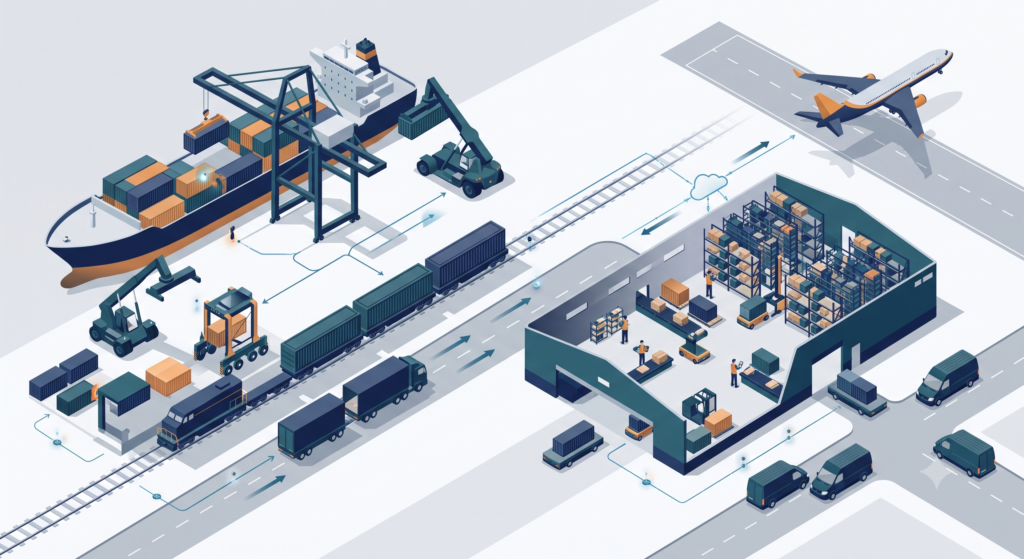
Logistics companies operate in a fast-moving environment where efficiency, visibility, and customer satisfaction directly impact profitability. Understanding these challenges is essential for anyone trying to sell into this space.
Meeting rising customer expectations is one of the most consistent pressure points. Modern buyers expect real-time shipment tracking, accurate delivery windows, and instant updates. Any gap in visibility can damage trust quickly and push clients toward competitors.
Rising warehousing and storage costs continue to squeeze margins. Logistics leaders are constantly looking for ways to optimise warehouse space through automation, better inventory management, and smarter storage strategies. Vendors who speak directly to these cost pressures get attention.
Supply chain disruptions remain a significant operational risk. Natural disasters, geopolitical events, labour shortages, and other unforeseen events can delay shipments, increase costs, and affect performance at every level. Companies that have not built resilient supply chain strategies are particularly vulnerable.
The rapid growth of e-commerce has added further pressure across the board. Customers now expect faster deliveries, flexible fulfilment options, and seamless order experiences. To meet these demands, logistics providers are investing heavily in automation, route optimisation, and digital infrastructure.
Because these challenges affect operations, technology investments, procurement decisions, and vendor partnerships, reaching the right logistics decision makers at the right moment is critical. A targeted Logistics Services Email List helps vendors connect directly with the professionals responsible for solving these exact business challenges.
Who Can Benefit from a Logistics Services Email List?
Several types of businesses and professionals find this kind of targeted database valuable.
Vendors and Suppliers Businesses selling fleet management software, GPS tracking systems, warehouse automation tools, or vehicle parts need direct access to procurement and operations teams. A targeted list eliminates the gatekeeping and gets your pitch in front of the decision maker without going through layers of administration.
E-Commerce Businesses Growing e-commerce brands that rely on multiple logistics partners for fulfilment, last-mile delivery, or international shipping can use a logistics mailing list to evaluate providers, negotiate rates, or identify backup vendors during supply chain disruptions.
Consultants and Advisors Strategy consultants, compliance specialists, and process improvement firms working with logistics companies need to build pipeline consistently. A segmented Logistics Services Email List gives them a reliable source of outreach targets without depending entirely on referrals or word of mouth.
Recruiters and Staffing Agencies Logistics is one of the most talent-hungry industries globally. Recruitment firms specialising in supply chain and operations roles use contact databases to reach hiring managers and HR leads across freight, 3PL, and courier companies efficiently.
Financial and Insurance Providers Commercial vehicle insurers, trade finance providers, and fleet leasing companies all have logistics businesses as a core market. Targeted contact data helps them reach financial decision makers inside logistics firms without wasting budget on broad campaigns.
And right now, there has never been a better time to reach them — here is why.
How Technology Adoption Is Changing 3PL Operations
The days of random, impulsive decision-making in logistics are over. Modern third-party logistics companies are under pressure to move faster, make fewer errors, and deliver more consistent results — and technology is the engine driving that shift.
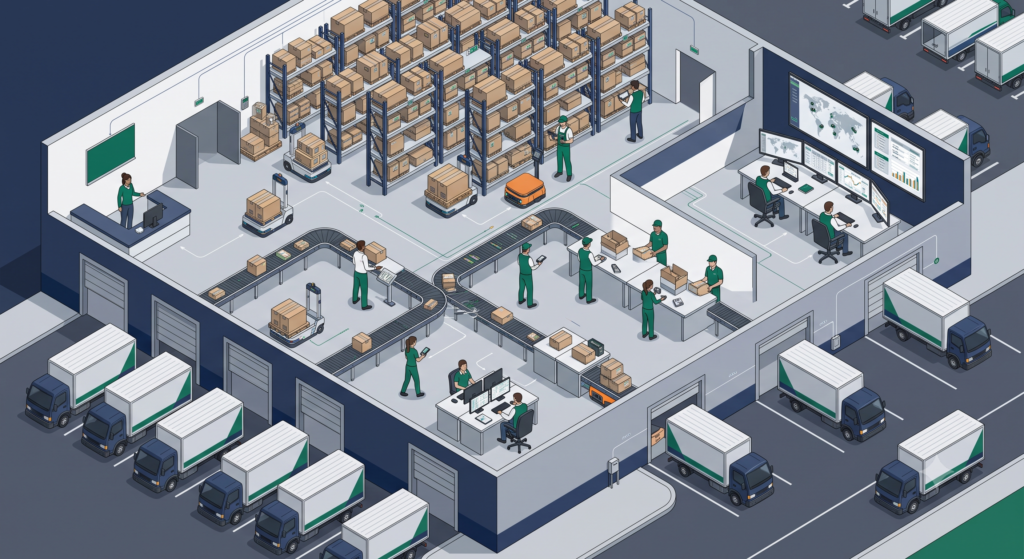
Data-driven decision-making has become the new standard across 3PL operations. Route optimisation tools analyse traffic patterns, fuel costs, and delivery windows in real time, helping fleet managers make smarter calls that reduce both cost and delays. Inventory management systems now track stock levels across multiple warehouses simultaneously, cutting down on overstock, shortages, and misplaced orders that used to eat into margins silently.
Automation is reshaping the warehouse floor just as significantly. Automated order fulfilment systems reduce the human error that once caused costly returns, delayed shipments, and damaged customer relationships. When machines handle repetitive picking, sorting, and packing tasks, operations run faster and more reliably — freeing up human teams to focus on higher-value work.
For 3PL companies that have embraced this shift, the competitive advantage is real and visible. Clients increasingly choose logistics partners based on reliability metrics, real-time tracking capability, and error rates — not just on price. A 3PL that can demonstrate technology-backed precision builds a reputation as a trusted, dependable partner rather than just another vendor.
This technology shift also has a direct implication for anyone trying to sell into the 3PL space. Decision makers inside these companies are no longer just operations managers — they are now evaluating software vendors, automation providers, integration partners, and data tools on a regular basis. A targeted Logistics Services Email List gives you direct access to exactly these professionals at exactly the moment they are actively looking for solutions.
Key Data Fields in a Quality Logistics Services Email Database
Not all databases are built the same. When evaluating a Logistics Services Email Database, look for these essential data fields:
Job Title — ensures you reach decision makers, not junior staff.
Company Size — helps segment by deal size and sales cycle length.
Sub-sector — separates freight from courier from 3PL targeting.
Geographic Location — essential for regional campaigns and compliance.
Direct Email — reduces bounce rates and improves deliverability.
Phone Number — supports multi-channel follow-up sequences.
LinkedIn Profile — enables social selling alongside email outreach.
The ContactMetrix Logistics Services Email List includes over 20 data fields per contact, a 90 percent deliverability guarantee, and data refreshed every 30 to 45 days — so you are never working with stale records.
Best Practices for Using a Logistics Services Email Database
Having the list is only step one. How you use it determines whether it produces results.
Segment Before You Send
Break the database into focused groups based on job role, company size, sub-sector, or geography. A message written for a freight forwarding director reads differently from one aimed at a courier fleet manager. Segmentation lets you personalise at scale without rebuilding your entire campaign from scratch.
Write for the Reader, Not the Sale
Logistics professionals are practical people. They respond to content that helps them solve a real operational problem, not content that leads with product features. Educational emails addressing compliance updates, cost-saving strategies, or technology adoption consistently outperform promotional blasts. If your email saves them time or solves a problem, they remember you.
Use Subject Lines That Create Curiosity
Open rates are decided before the email is ever read. A subject line that raises a question or hints at something valuable gets more opens than a generic announcement. Test variations across your segments and track what works for each audience.
Be Direct with Your Call to Action
Logistics professionals are time-poor. If you want them to book a demo, say so clearly. If you want them to download a guide or request a quote, make the action obvious and the value immediate. One clear action per email. No exceptions.
Verify the List Regularly
Contact data in logistics goes stale faster than in many other industries. Job movement is high, companies merge, and email addresses are abandoned frequently. Run your list through a verification tool on a consistent basis, remove hard bounces promptly, and re-engage inactive contacts with a separate sequence before removing them entirely.
Stay Compliant
Before sending anything, confirm your data and outreach practices align with GDPR, CCPA, and any other regulations applicable to your market. The ContactMetrix Logistics Services Email List is built from 100 percent opt-in sources and is fully compliant, but your own campaign practices need to meet the same standard.
Why ContactMetrix for Your Logistics Services Email Database
There are many data providers in the market. Here is what separates a ContactMetrix Logistics Services Email Database from a generic purchased list:
90 percent deliverability guarantee — your emails reach real inboxes, not spam folders.
100 percent opt-in contacts — every contact has consented to be reached.
Refreshed every 30 to 45 days — no outdated records dragging down your campaigns.
Over 20 data fields per contact — enough detail to segment and personalise effectively.
CRM-ready formats — delivered in xlsx or csv for immediate upload into any platform. Global coverage — target logistics companies across North America, Europe, Asia-Pacific, and beyond.
Lifetime data ownership — one purchase, no recurring licence fees.
Free sample available — test the data quality before you commit.
Dedicated support team — help with setup, segmentation, and campaign questions whenever you need it.
Conclusion
Logistics is a relationship-driven industry. Most deals start with someone knowing the right person or being introduced at the right moment. Email marketing does not replace that, but it replicates the introduction at scale. If you want to reach the right logistics professionals consistently and before your competitors do, the foundation is always good data. A verified, well-segmented Logistics Services Email List gives you exactly that starting point.
Frequently Asked Questions
What information is typically included in a Logistics Services Email List?
Most quality databases include full name, job title, department, company name, direct business email, phone number, company size, sub-sector, and geographic location.
How often should I update my Logistics Services Email Database?
At a minimum, every quarter. Logistics is a high-movement industry — people change roles, companies restructure, and email addresses are abandoned regularly.
Is it legal to use a purchased logistics email list?
Yes, if the data comes from opt-in sources and your outreach complies with GDPR, CCPA, and applicable regulations. The ContactMetrix Logistics Services Email List is built from compliant, opt-in data sources.
What email content works best for logistics professionals?
Practical, problem-solving content performs best. Case studies showing cost reductions, guides on compliance changes, tools that simplify fleet or route management, and insights on supply chain disruptions consistently generate engagement. Logistics professionals respond to content that makes their operations easier or reduces risk.
Can small businesses use a Logistics Services Email List effectively?
Absolutely. A targeted email list levels the playing field significantly. A small supplier or specialist consultant with a focused message and a clean, well-segmented list can reach the same decision makers that large enterprise sales teams do — without needing a full sales team behind them.
How is a Logistics Services Email Database different from a general B2B list?
A general B2B list covers contacts across all industries. A logistics-specific database is pre-filtered to include only professionals working in freight, courier, 3PL, express delivery, and related logistics operations — meaning every contact on the list is a potential prospect, not a diluted mix of irrelevant industries.
