
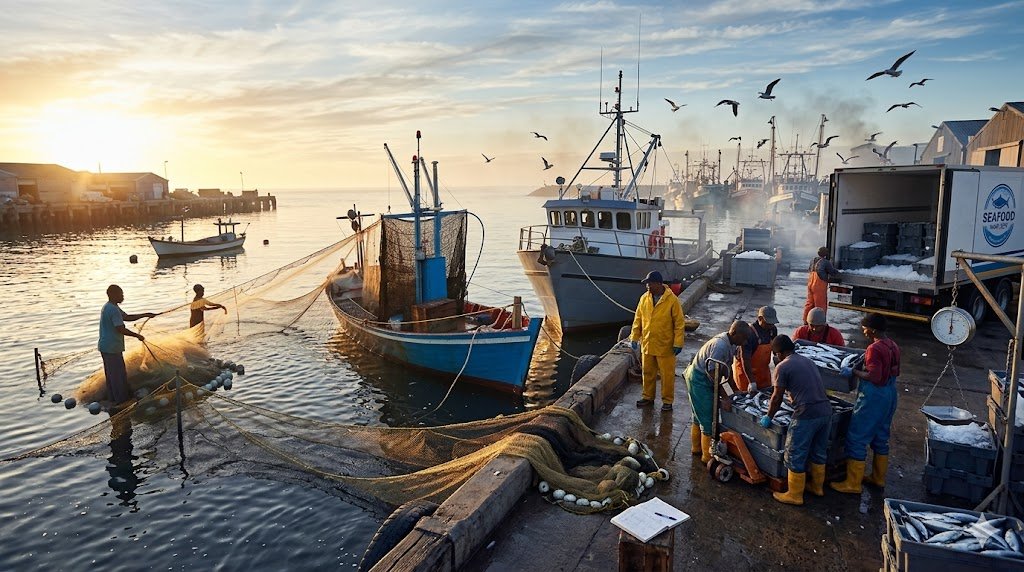
The global fishing industry is expanding fast — and so is the competition. Suppliers, equipment vendors, and service providers are all chasing the same decision makers. Budgets are being spent. Outreach is going out. But most of it is landing in the wrong inboxes, at the wrong time, with the wrong message.
If your campaigns aren’t cutting through, you’re not just wasting budget — you’re handing opportunities directly to competitors who are better targeted. That’s exactly where a Fishing Industry Email List changes the equation. It removes the guesswork from prospecting and puts your message directly in front of the people who have the authority to act on it — no cold searching, no wasted sends, no more chasing the wrong contacts.
What Is a Fishing Industry Email List?
A Fishing Industry Email List is a verified database of professional contacts across the fishing sector. Rather than reaching out to a broad, unfiltered audience, it gives you a focused starting point — the right companies, the right roles, and the right regions — so every outreach effort has a real purpose behind it.
A well-built fishing industry contact database typically includes:
- Company names and job titles
- Direct business email addresses and phone numbers
- Geographic locations including headquarters and operational regions
- Industry sub-sector classifications
That last point matters more than most vendors realise. The fishing sector is not one uniform market. It spans commercial fleets, aquaculture farms, seafood processors, packaging operations, and equipment distributors — each with different buying cycles, different pain points, and different decision makers. A fishing industry contact database that accounts for this gives you the precision that generic B2B lists simply cannot deliver.
Why the Seafood Industry Is Hard to Sell Into
The seafood sector is booming, driven by rising global consumption and expanding development opportunities across fishing, aquaculture, and processing. Yet despite its growth, it remains one of the harder sectors to sell into — and most vendors approach it without fully understanding why.
Perishability alone changes the entire buying dynamic. Decisions are time-sensitive. Supply availability shifts constantly. There is little room for vendors who cannot speak the language of the industry or demonstrate an understanding of how operations actually run.
Add to that a highly fragmented market structure where buyers range from independent fishermen to large-scale processing conglomerates, and it becomes clear why a one-size-fits-all approach consistently fails here. The decision-making responsibilities of a B2B buyer in the fishing sector vary enormously depending on their role, their company size, and their location.
Geographic specificity compounds this further. Transportation distance and temperature control directly affect which vendors are even relevant to a given buyer. And because the industry operates around tight seasonal and regional cycles, reaching the wrong contact at the wrong time is just as costly as reaching the wrong contact altogether.
A well-segmented fishing companies email database cuts through all of this. It puts the right contacts in front of you at the right moment — filtered by vertical, role, and region — so your outreach is relevant before it even lands.
Key Segments Covered in a Fishing Industry Email List
A quality Fishing Industry Email List is segmented by industry vertical so you can target the most relevant audience without wasting sends on contacts that will never convert.
Fishermen and Fishing Fleets This segment covers independent fishermen and commercial fishing fleets involved in harvesting wild-caught seafood. It is directly relevant for vendors of equipment, safety gear, fuel, and vessel maintenance services — businesses where the buying decision sits with fleet operators and operations managers, not procurement teams.
Fishing Equipment Retailers Businesses engaged in the distribution of fishing gear and equipment including nets, traps, and angling equipment. A strong target segment for manufacturers and wholesale suppliers looking to expand their retail distribution footprint.
Boat Suppliers Companies involved in the manufacturing and supply of fishing vessels, marine hardware, and marine electronics. Relevant for engineering firms, parts suppliers, and technology vendors serving the broader marine sector.
Seafood Packaging and Processing Companies Organisations specialising in cleaning, freezing, canning, and packaging seafood products. A key segment for packaging material suppliers, cold chain providers, and food safety consultants — where buying cycles are more structured and procurement-led.
Aquaculture and Fish Hatcheries Businesses involved in commercial fish farming, shellfish cultivation, fish hatchery operations, and finfish production. This segment is growing rapidly and represents a strong opportunity for feed suppliers, water quality solution providers, and technology vendors who can speak directly to the operational demands of modern fish farming.
Beyond vertical segmentation, a Fishing Industry Mailing List also filters contacts by decision-maker role — including C-level and executive management, operations and fleet managers, procurement managers, and sales and marketing professionals. That combination of vertical and role filtering is what separates a genuinely useful list from one that is simply large.
Want to Build Highly Targeted Fishing Industry Email List
How Aquaculture Growth Is Creating New B2B Opportunities
Sustainable Aquafeed Is Reshaping Supplier Demand-
One of the most significant shifts in aquaculture is happening in aquafeed. Traditional fishmeal is steadily being replaced by sustainable alternative proteins, including insect meal, microbial biomass, and algae-based oils.
Ingredient suppliers that have pivoted toward these alternatives are finding a receptive and rapidly expanding customer base among fish farmers seeking to reduce costs while meeting sustainability targets.
Technology Adoption Is Creating New Opportunities
Data-driven farm management is generating significant vendor opportunities across aquaculture. Modern operations increasingly rely on sensors, automated feeding systems, and real-time water quality monitoring to optimise production outcomes.
Farms adopting these technologies are outperforming those that have not. As a result, the rest of the industry is accelerating investment in similar solutions to remain competitive.
AI-Driven Disease Monitoring Is Gaining Momentum
One of the most significant shifts in aquaculture is happening in aquafeed. Traditional fishmeal is steadily being replaced by sustainable alternative proteins, including insect meal, microbial biomass, and algae-based oils.
Ingredient suppliers that have pivoted toward these alternatives are finding a receptive and rapidly expanding customer base among fish farmers seeking to reduce costs while meeting sustainability targets.
What This Means for B2B Vendors
Aquaculture is no longer a niche corner of the fishing industry. It is one of its fastest-growing segments, and vendors who recognise this shift early are positioning themselves ahead of the competition.
Decision-makers within aquaculture businesses are actively evaluating new suppliers, technologies, and partnerships. A targeted Fishing Industry Email List helps you connect with these decision-makers before your competitors do.
Benefits of Using a Fishing Industry Email List
Building a strong network with key decision makers in the fishing sector takes months of consistent effort and follow-up. A verified Fishing Industry Email List shortens that timeline significantly — giving you direct access to the contacts who matter from day one.
| Benefit | What It Means for You |
|---|---|
| Direct access to decision makers | Shortens the sales cycle from day one |
| Niche segmentation | Focus only on prospects most likely to convert |
| Verified data | Lower bounce rates, protected sender reputation |
| Compliance built in | GDPR, CCPA, and CAN-SPAM adherence across all markets |
Niche filtering by job title, fleet size, or region means your campaigns are focused on the prospects most likely to convert — not a diluted mix of loosely relevant contacts. Verified data in a fishing industry contact database reduces bounce rates significantly, which protects your sender reputation and keeps deliverability high over time.
A quality Fishing Industry Mailing List is also built for compliance from the ground up. A properly structured Fishing Industry Mailing Address database adheres to GDPR, CCPA, and CAN-SPAM requirements — so your outreach operates within data protection guidelines across every market you target, without additional legal overhead on your end.
How to Write Emails That Actually Get Responses
A Fishing Industry Email List only delivers results when the outreach built around it is relevant. Seafood professionals operate on tight schedules — fleet cycles, seasonal pressures, and operational demands leave little patience for messages that do not speak directly to their world.
A Fishing Industry Email List only delivers results when the outreach built around it is relevant. Seafood professionals operate on tight schedules — fleet cycles, seasonal pressures, and operational demands leave little patience for messages that do not speak directly to their world.
Open with relevance. Avoid generic introductions that could apply to any industry. Instead, open with a reference to a recent regulatory development, a market shift, or a seasonal challenge that is actually affecting fishing operations right now. When a recipient reads the first line and thinks “this person understands my industry,” the rest of the email gets read.
Lead with value. Before mentioning your product or service, address a specific pain point the recipient is likely facing — whether that is rising feed costs, compliance complexity, supply chain disruption, or cold chain reliability. Show that you understand the problem before you offer the solution. That sequence builds credibility faster than any sales pitch.
Keep the format easy to scan. Seafood professionals are not reading long blocks of text between operational tasks. Use short paragraphs, clear spacing, and direct language. If your key point cannot be understood in ten seconds of scanning, rewrite it until it can.
Close with a high-value call to action. Do not end with a vague “let me know if you are interested.” Give them a specific, low-friction next step — a free sample, a short discovery call, or a relevant case study that speaks to their vertical. The easier and more relevant the next step, the higher the response rate.
Fishing Industry Mailing List: Two mistakes that consistently cost B2B vendors the most in this sector
Even with the right data, outreach can fall flat when the fundamentals are off. These are the two mistakes that consistently cost B2B vendors the most in this sector.
Mistake 1: Sending the same message to every decision maker
The requirements of a commercial fishing fleet are completely different from those of a seafood processor. A procurement manager evaluating packaging equipment has different priorities from a fleet operations director sourcing vessel parts. Tailoring your message to the specific pain points of each audience is what separates campaigns that generate responses from campaigns that get ignored.
Mistake 2: Ignoring seasonal and geographic timing
The fishing industry operates around seasonal cycles and regional trade patterns. Reaching decision makers without a basic understanding of when and where they are most active is a waste of both budget and opportunity. Aligning your campaigns with regional fishing seasons and market cycles dramatically improves response rates and relevance.
Why Choose ContactMetrix for Your Fishing Industry Email List?
ContactMetrix delivers verified, accurate, and marketing-ready contact data built specifically for B2B lead generation in the fishing sector.
- Verified and regularly updated — The ContactMetrix Fishing Industry Email List is consistently verified to reflect operational shifts, leadership changes, and export market updates. You are always working with current, reliable records.
- Hyper segmentation — Filter the fishing companies email database by industry vertical, job title, geography, company size, and more. Precise segmentation ensures your message reaches the right person every time.
- Multi-channel ready — Single-channel outreach rarely produces strong results on its own. The ContactMetrix fishing industry contact database supports email campaigns, direct mail, LinkedIn outreach, and social selling — giving your campaigns multiple touchpoints to work with.
- Full compliance — Built in strict adherence to GDPR, CAN-SPAM, and CCPA guidelines, supporting compliant campaigns across every global market you operate in.
- Dedicated support — The ContactMetrix team helps you select, segment, and optimise your list based on your specific campaign requirements — so you are not navigating the data alone.
Check Fishing Industry Email List Data Quality
Conclusion
The fishing industry moves fast, operates around tight seasonal cycles, and rewards vendors who show up at the right time with the right message. Generic outreach does not cut through in a sector this specialised.
A verified, well-segmented Fishing Industry Email List gives you the foundation to reach the right decision makers consistently — whether you are targeting commercial fleets, aquaculture operations, seafood processors, or equipment distributors. The data does the heavy lifting so your campaigns can focus on delivering value rather than chasing the wrong contacts.
Ready to build real pipeline? Explore the ContactMetrix Fishing Industry Email List and request your free sample today.
Frequently Asked Questions
1. What does a Fishing Industry Email List include?
Full name, job title, company name, direct business email, phone number, geographic location, and industry sub-sector, along with multiple data fields to support precise segmentation and personalized outreach.
2. How is a fishing industry contact database different from a general B2B list?
Every contact is pre-filtered to the fishing sector only. No diluted mix of unrelated industries, just relevant prospects across fishing, aquaculture, seafood processing, packaging, and related verticals.
3. Why does segmentation matter so much here?
A commercial fleet operator and a seafood packaging company have entirely different priorities and buying cycles. Segmentation ensures your message speaks directly to the recipient’s actual situation which is what drives responses.
4. How often should a fishing companies email database be updated?
At minimum, quarterly. The fishing industry sees regular operational changes, leadership shifts, and seasonal business cycles that affect contact accuracy. ContactMetrix refreshes its data consistently so you are always working with current, deliverable records.
5. Is it legal to use a purchased Fishing Industry Mailing Address database?
Yes — provided the data was collected from opt-in sources and your outreach practices comply with GDPR, CCPA, and CAN-SPAM regulations. The ContactMetrix list is built from fully compliant, opt-in sources.
6. Can small businesses benefit from a Fishing Industry Mailing List?
Absolutely. With the right data and a focused message, a small business can reach the same decision makers that large sales teams target — without needing the headcount or budget of an enterprise operation.
